Tuesday, January 17, 2012

Western working visit!


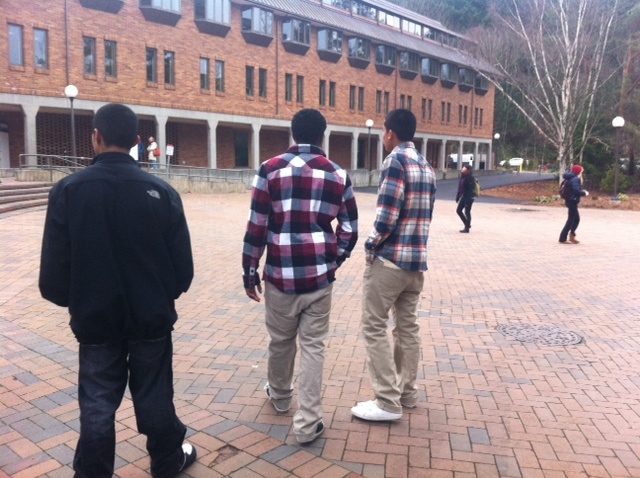
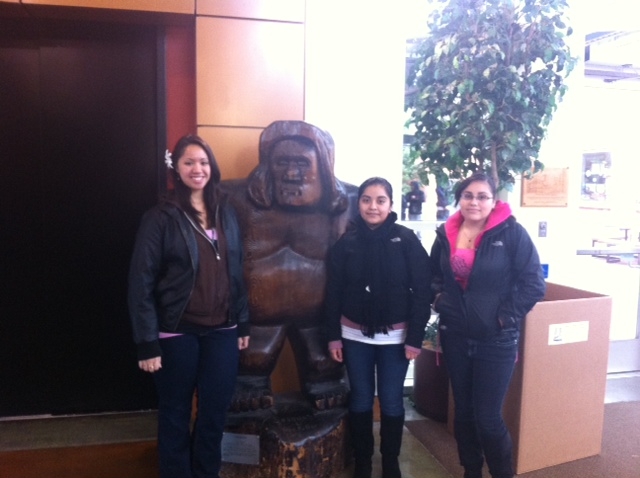
This was a wonderful morning! 23 students attended the working visit and 19 were able to submit their applications to Western! Thank you to Natalie and Anab for coming down to help our students! Now we are just waiting for those acceptance letters to roll in... 

Tuesday, December 20, 2011

Happy Holidays!

Happy Holidays from the Evergreen Campus College & Career Center
~ Ms. Fichamba, Mr. Zombro & Aaron :-)

Monday, December 19, 2011

What Are Soft Skills?

"Soft skills" is a term that refers to personal qualities, habits, attitudes, and social graces that make someone a good employee and a compatible co-worker. Research shows that soft skills can be just as important in job performance as technical skills.

Some of the most common soft skills employers look for when assessing whether you would be a good employee include these:

• Strong work ethic: Are you motivated and dedicated to getting the job done, no matter what? Will you be conscientious and do your best work without being told or supervised?

• Positive attitude: Are you optimistic and upbeat? Do you keep your negative opinions and comments to yourself unless they lead to correcting a problem or eliminating a potential problem?

• Good communication skills: Are you both verbally articulate and a good listener? Do you make eye contact when you talk to people? Does your body language deliver the message that's needed?

• Time management abilities: Do you know how to prioritize tasks and work on a number of different projects at once? Will you use your time on the job wisely? Do you work quickly and accurately?

• Problem-solving skills: Are you resourceful and able to creatively solve problems that will arise? Will you take ownership of problems or leave them for someone else? Will you refrain from blaming others for your own mistakes?

• Acting as a team player: Will you work well in groups and teams? Will you be cooperative and take a leadership role when appropriate? Can you overcome any tendencies to manipulate situations to your advantage?

• Self-confidence: Do you truly believe you can do the job? Will you project a sense of calm and inspire confidence in others? Will you have the courage to ask questions that need to be asked and to freely contribute your ideas?

• Ability to accept and learn from criticism: Will you be able to handle criticism? Does your self-esteem allow you to accept rejection when other team members disagree with you?

• Flexibility/Adaptability: Are you able to adapt to new situations and challenges? Will you embrace change and be open to new ideas? Will you be locked into your previous company's procedures and fail to see the importance of adapting to new ways?

• Working well under pressure: Can you handle the stress that accompanies deadlines and crises? Will you be able to do your best work and come through in a pinch? Can you maintain focus and work efficiently under pressure?

Remember, whether you are applying for a service position or a technical job, it's your combination of core and soft skills that will set you apart from the crowd.


Adapted from a CareerBuilder/MSN article

Wednesday, December 14, 2011

Financial Aid Night 2011


Thank you to Kim Bobbit from Highline Community College for prensenting at our Financial Aid night. Thanks also to the families that attended!

Monday, December 12, 2011

Interviewers' Pet Peeves

Just like everyone else, experienced interviewers can name their pet peeves. Here are common pet peeves described by interviewers and tips for avoiding them.


• Smells: "You may think a spray of your favorite perfume or cologne will add just the right touch for our meeting. But my allergies and sense of smell warn me immediately that I want to get you out of our small meeting space as quickly as possible. Leave your fragrance at home, and you won't risk offending me."

• Communication - Too Little: "An applicant who won't talk exasperates me. Even when I prod for more information or ask for questions, I still have no luck. When I end the interview by saying, 'Now, it's your turn to ask questions,' some applicants don't have any. That when I know it's time to say goodbye and try for a better applicant. I want applicants who can describe how they can help my company."

• Communication - Too Much: "A chatterbox or rambler gets to me. If I ask a question and you're still trying to answer it ten minutes later, I'll wrap up the meeting and wish you a pleasant day. Candidates should stay focused and answer in two or three minutes the question I asked."

• Averting Your Eyes: "Nonverbal communication tells me as much about you as what you say. If you don't make eye contact, but look down, around, everywhere but at me, I know you're intimidated by the process. You won't succeed on teams where you're expected to contribute. I also distrust someone who won't look at me when I ask a question. If you are uncomfortable looking into someone's eyes, look at the third eye, just above and between the person's two eyes."

• Slang and Street Speak: "The way applicants use language really gets to me. Using 'awesome' and 'like' constantly shows immaturity. I also stop paying attention when applicants say 'um,' and 'uh' between every other word."

• Little Lies: "Small lies are too common. This includes not being completely truthful with relevant information and exaggerating accomplishments. Building trust during the interview is key to getting an offer."


Adapted from a Monster/Yahoo! article

Friday, December 9, 2011

College Acceptances...

College Acceptances are going to start coming in over the holidays please be sure to share with us because we love to Celebrate your scuccess! I am delighted to announce that we have already recieved one!
  • Michele Palado ~ Trinity Lutheran ~ T.E.C.